
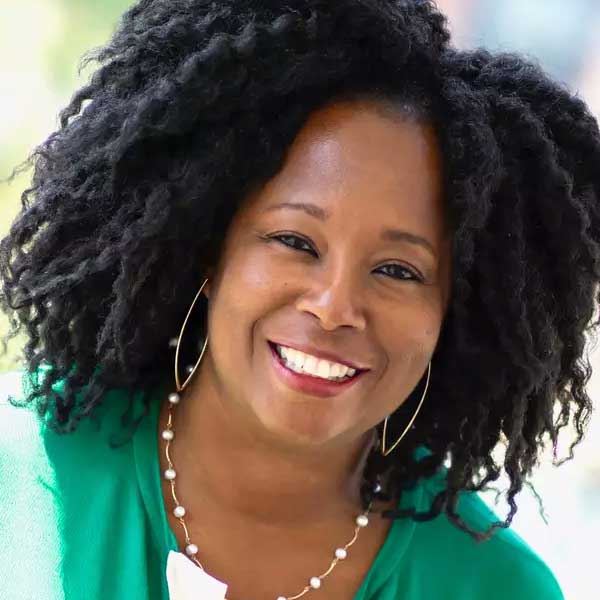
Columbia University, African American and African Diaspora Studies Department (Mignon R. Moore headshot published on her department profile page). Image source.
A stepfamily forms when a parent partners with someone new and a child from an earlier relationship lives in the household. For Black lesbian families, the published record is small. Moore studied Black lesbian stepfamilies directly. Acosta studied Queer stepfamilies more broadly and reported race inside that sample.
Moore published her first study in the American Sociological Review in 2008. She analyzed 32 Black women in lesbian stepfamilies. Partners shared the providing role. Biological mothers did significantly more household chores than their partners. Moore found that the extra chore work came with more authority over household organization, finances, and childrearing. She linked that authority to the biological mother’s legal tie to the child and to the responsibility others assigned to her for the child’s wellbeing. The pattern held even when she earned less than her partner.
Moore returned to stepfamilies in Invisible Families, her 2011 book on 100 Black gay women in New York City. Sixty eight women in the sample were parenting in some form. Thirteen were nonbiological mothers parenting a partner’s child in a stepfamily household. Moore called this experience situational mothering and treated the stepparent role as a real form of parenting.
Acosta published Queer Stepfamilies with New York University Press in 2021. She interviewed 51 people in 43 stepfamilies in 18 states and the District of Columbia, mainly in southern states, from 2013 to 2017. The sample was broader than Black lesbian families. Three participants identified as African American or Black, and 22 of the 43 families included at least one member who identified as other than White. Acosta called the parenting in these households plural parenting, her term for parenting by three or more people after a relationship ended. Former partners stayed in the parenting group in some families. Children created their own words for family members whose roles had no standard name. Acosta also wrote from her own stepfamily. She had a child in a heterosexual relationship, raised him as a single parent, and later married her wife.
Race shaped recognition in Acosta’s accounts. About half of her interviews were with members of interracial Queer stepfamilies. Tasker, in a March 2023 review in Social Forces, summarized Acosta’s finding that other people often assumed a family shared one race. A stepparent whose race differed from a child’s could go unrecognized as a family member at school pickup. Some families used a shared surname to signal membership. That step did not resolve recognition for interracial families.
Acosta reported that only 16 of the 43 families held legal recognition as stepfamilies during the study period. Her interviews from 2013 to 2017 straddled the Supreme Court’s 2015 marriage-equality decision in Obergefell v. Hodges, so participants described different legal conditions within the same family form.