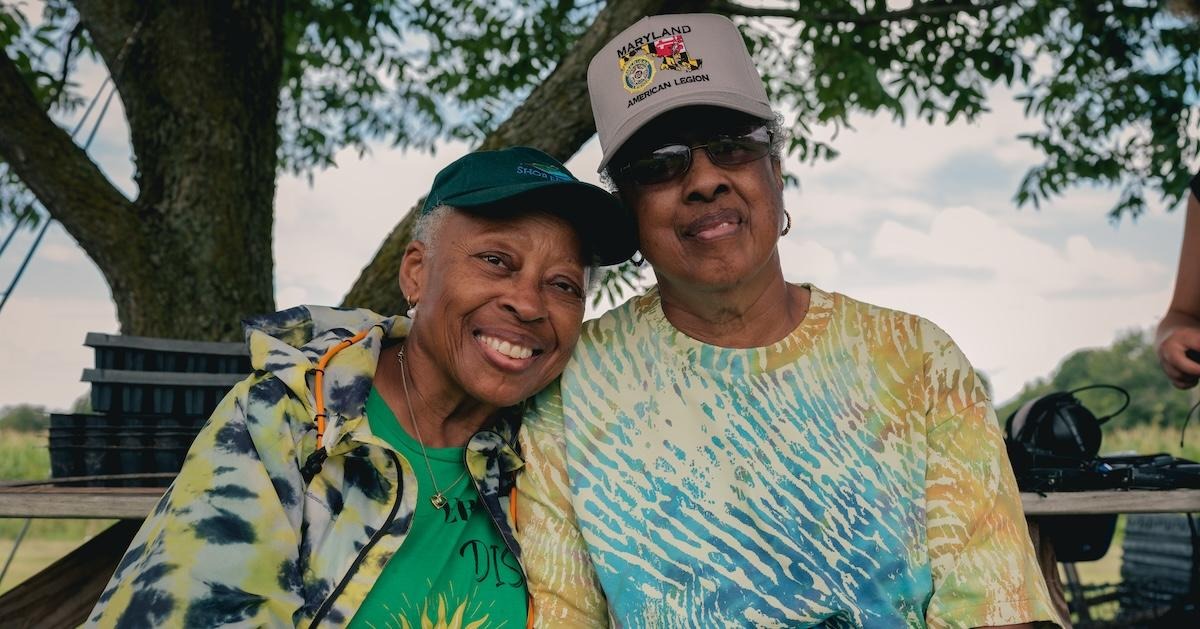
Beverly Price (photo of Donna Dear and Paulette Greene at Mt. Pleasant Acres Farms, published as The Aunties still by Black Public Media; the same Beverly Price credit runs on Black Enterprise's February 2025 coverage). Image source.
The Movement Advancement Project reported in September 2019 that at least 10 million people of color, including LGBT people of color, call rural America home. The report noted that the South is home to nine in ten Black people who live in rural and small town areas, and that Black same sex couples are concentrated in the South. It also noted two practical conditions. Smaller populations make difference more noticeable, and rural areas have fewer support structures that accept people both as people of color and as LGBT people.
E. Patrick Johnson interviewed more than seventy African American Queer women who were born, raised, and continued to reside in the American South for Black. Queer. Southern. Women., published by the University of North Carolina Press in 2018. The interviews took place between August 2012 and September 2014. The publisher describes the book as a record of community building and of thriving Black lesbian communities in the region. The women in the book stayed in the South. Their accounts treat belonging as something built where they already lived.
In Preston, Maryland, on the Eastern Shore, belonging has a specific address. Donna Dear and Paulette Greene met in 1974. Black Enterprise reported in February 2025 that they identify as Black gay women and life partners, and that they teach sustainability and conservation at Mt. Pleasant Acres Farms. The farm borders land developed by Greene’s great grandparents. A Maryland state release from December 2017 reported that Greene, a former teacher, and Dear, a Vietnam veteran, shared a portion of their acreage with farming newcomers. The connection runs in both directions. Black Enterprise reported that filmmakers Charlyn Griffith Oro and Jeannine Kayembe Oro have led tours to the farm since meeting Dear and Greene in 2016, connecting Black urban residents with rural land and food production, and that the filmmakers now count themselves among the couple’s many nieces and nephews.
Travel supplies another form of belonging for women who are spread out. Lisa Gomes graduated from law school in 2010 and was coming out and looking for community. Pink Ticket Travel reported in March 2026 that she did not like bars and clubs, so she hosted small gatherings in her one bedroom apartment in Washington, D.C. Those gatherings became Lesbifriends and grew into an annual winter trip. Gomes founded Lesbifriends Travel in 2022. The company hosts about a dozen group trips a year for Queer women of color. Gomes said the group holds meetups before trips, in person or online, and starts a WhatsApp group chat for each trip before the trip begins. She said people are still talking in some chats a year later. For the annual winter trip, she rents a house in Maryland, close to Washington, D.C., for a group of 25 to 30 people. On a July glamping trip, the group rented a whole resort for 50 people. Gomes said some guests live in places without a large Queer population, or in places where they are one of the only Black or brown people.